
We have been looking at the instruction manual for the staff of a medieval manor or lordship, called the Seneschaucy. This time we are looking at Ploughmen and Waggoners.

Traditional ploughing – Karnataka
The ploughmen ought to be men of intelligence, and ought to know how to sow, and how to repair and mend broken ploughs and harrows, and to till the land well, and crop it rightly; and they ought to know also how to yoke and drive the oxen, without beating or hurting them, and they ought to forage them well, and look well after the forage that it be not stolen nor carried off; and they ought to keep them safely in meadows and several pastures, and other beasts which are found therein they ought to impound. And they and the keepers must make ditches and build and remove the earth, and ditch it so that the ground may dry and the water be drained. And they must not flay any beast until someone has inspected it, and inquired by what default it died. And they must not carry fire into the byres for light, or to warm themselves, and have no candle there, or light unless it be in a lantern, and for great need and peril.
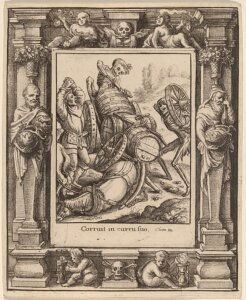 The waggoner ought to know his trade, to keep the horses and curry them, and to load and carry without danger to his horses, that they may not be overloaded or overworked, or overdriven, or hurt, and he must know how to mend his harness and the gear of the waggon. And the bailiff and reeve ought to see and know how many times the waggoners can go in a day to carry marl or manure, or hay or corn, or timber or firewood, without great stress; and as many times as they can go in a day, the waggoners must answer for each day at the end of the week. No waggoner or other shall cause a cart-horse or aver to be flayed without inspection and the command of his superior, until it be known why and for what default it died, as is said above. And no waggoner shall carry fire or candle into the stables, unless the candle be in a lantern, and this for great need, and then it must be carried and watched by another than himself. Each waggoner shall sleep every night with his horses, and keep such guard as he shall wish to answer for without damage; and so shall the oxherds sleep in the same way with their oxen.
 Ann Marie Thomas is the author of five medieval history books, a surprisingly cheerful poetry collection about her 2010 stroke and two further poetry collections, and the science fiction series Flight of the Kestrel, of which there are four books are out now. Follow her at http://eepurl.com/bbOsyz and get free books.