We have been looking at the instruction manual for the staff of a medieval manor or lordship, called the Seneschaucy. Here are some shorter pieces.
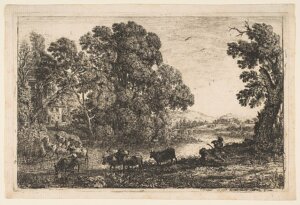 The cowherd ought to be skilful, knowing his business and keeping his cows well, and foster the calves well from the time of weaning. And he must see that he has fine bulls and large and of good breed pastured with the cows, to mate when they will. And that no cow be milked or suckle her calf after Michaelmas, to make cheese of remain; for this milking and this remain make the cows lose flesh and become weak, and will make them mate later another year, and the milk is better and the cow poorer. And he ought to see that the avers be well supplied with forage, and well kept in winter and summer, as he shall wish to answer, and that no cow or aver be flayed before his superior has seen it and known by what default it died. And no fire or candle shall be carried into the cowhouse, except in the manner aforesaid.
 The swineherd ought to be on those manors where swine can be sustained and kept in the forest, or in woods, or waste, or in marshes, without sustenance from the grange; and if the swine can be kept with little sustenance from the grange during hard frost, then must a pigsty be made in a marsh or wood, where the swine may be night and day. And then when the sows have farrowed, let them be driven with the feeble swine to the manoirs and kept with leavings as long as the hard frost and the bad weather last, and then driven back to the others. And if there is no wood or marsh or waste where the swine may be sustained without being altogether kept on the grange, no swineherd or swine shall be on the manor, except only such as can be kept in August on the stubble and leavings of the grange, and when the corn is threshed for sale, and as soon as they are in good condition and well, let them be sold. For whoever will keep swine for a year from the cost of the grange alone, and count the cost and the allowance for the swine and swineherd, together with the damage they do yearly to the corn, he shall lose twice as much as he shall gain, and this will soon be seen by whoever keeps account.
 Each shepherd ought to find good pledges to answer for his doings and for good and faithful service, although he be companion to the miller. And he must cover his fold and enclose it with hurdles and mend it within and without, and repair the hurdles and make them. And he ought to sleep in the fold, he and his dog; and he ought to pasture his sheep well, and keep them in forage, and watch them well, so that they be not killed or destroyed by dogs or stolen or lost or changed, nor let them pasture in moors or dry places or bogs, to get sickness and disease for lack of guard. No shepherd ought to leave his sheep to go to fairs or markets, or wrestling matches, or wakes, or to the tavern, without taking leave or asking it, or without putting a good keeper in his place to keep the sheep, that no harm may arise from his fault.
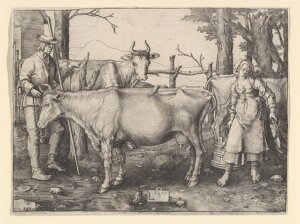 The dairymaid ought to be faithful and of good repute, and keep herself clean, and ought to know her business and all that belongs to it, She ought not to allow any under-dairymaid or another to take or carry away milk, or butter, or cream, by which the cheese shall be less and the dairy impoverished. And she ought to know well how to make cheese and salt cheese, and she ought to save and keep the vessels of the dairy, that it need not be necessary to buy new ones every year. And she ought to know the day when she begins to make cheese and of what weight, and when she begins to make two cheeses a day, of how much and of what weight, and then the bailiff and the reeve ought to inspect the dairy often and the cheeses, when they increase and decrease in weight, and that no harm be done in the dairy, nor any robbery by which the weight shall be lessened. And they ought to know and prove and see when the cows make a stone of cheese and butter, and when the ewes make a stone of the same, that they may be able the more surely to answer in the account. No cow shall be milked or suckled after Michaelmas, and no ewe after the feast of Our Lady, for the reason aforesaid.
 Ann Marie Thomas is the author of five medieval history books, a surprisingly cheerful poetry collection about her 2010 stroke and two further poetry collections, and the science fiction series Flight of the Kestrel, of which there are four books are out now. Follow her at http://eepurl.com/bbOsyz and get free books.